Anyone who has ever watched a phone app promise sunshine only to be caught in a downpour minutes later knows the limits of generic forecasting. A professional weather station closes that gap by delivering hyper-local, real-time readings drawn directly from your garden, rooftop, or farmland rather than a forecast averaged across a wide region. As we move through 2026, these instruments have become indispensable not just for meteorologists but for gardeners, farmers, and weather enthusiasts who need precise, trustworthy data at their fingertips.
In brief
- Professional weather stations provide hyper-local, real-time data that surpasses the accuracy of regional government weather forecasts.
- Key differences between professional and consumer-grade equipment include higher sampling frequencies, superior sensor calibration, and greater durability against environmental wear.
- Essential features for a professional station include the ability to measure temperature, humidity, wind, rainfall, and barometric pressure, often integrated with smart connectivity.
- Correct sensor placement is critical to avoid skewed readings caused by physical obstructions like buildings or trees.
- The Weatherflow Tempest is highlighted as the best overall model, while the Davis Vantage Pro2 remains the top choice for research and industrial reliability.
- Budget-conscious users can find reliable semi-professional systems like the Ambient Weather WS-2902, which balance cost with a comprehensive sensor suite.
- Selecting the right device requires aligning the station's level of precision and data management features with specific needs, such as agriculture, gardening, or meteorology.
Understanding Professional Weather Stations and Their Critical Role in Modern Meteorology
Official weather stations are often positioned ten to twenty miles apart, a spacing that inevitably introduces gaps and inaccuracies, particularly across varied terrain or microclimates. This is precisely where personal and professional-grade stations step in, offering hyper-local monitoring that captures the nuances a distant government sensor simply cannot. For farmers timing irrigation or gardeners protecting delicate crops from frost, this localised precision can make all the difference.
What distinguishes professional weather stations from consumer-grade equipment
The gulf between a basic gadget and a genuine professional instrument lies in consistency and calibration. Professional units monitor conditions several times per minute, feeding a constant stream of data rather than the occasional snapshot offered by simpler devices. This near-continuous sampling means sudden shifts, such as an approaching storm front or a rapid temperature drop, are captured almost instantly rather than being missed between updates.
Beyond sampling frequency, professional stations tend to feature more robust housings, better calibrated sensors, and superior resistance to environmental wear. They are built with longevity and reliability in mind, designed to withstand years of exposure to sun, wind, and rain without drifting from their factory-calibrated accuracy.
Key features and sensors every professional meteorological device must include
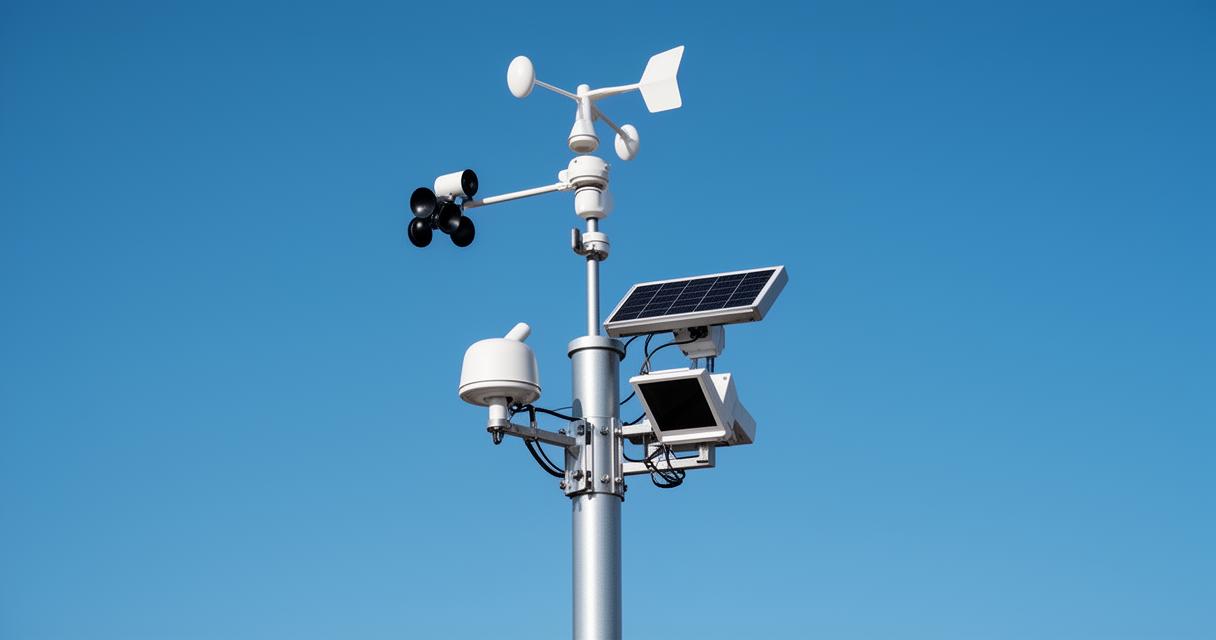
A genuinely capable station should measure temperature, humidity, wind speed and direction, rainfall, and barometric pressure at a minimum, with many premium models adding solar radiation and UV indices. Sensor quality varies considerably between manufacturers, and this is often where the price difference becomes justified. Equally important is sensor placement, since even the most expensive equipment will produce skewed readings if positioned too close to buildings, trees, or reflective surfaces.
Connectivity has also become a defining feature. The ability to share readings with platforms such as Weather Underground not only contributes to a wider network of community-driven forecasting but also allows users to cross-reference their own data against neighbouring stations for added confidence in accuracy.
Comprehensive Reviews of the Top 10 Professional Weather Stations Dominating 2026
With so many options on the market, narrowing down the best professional weather station for a given need requires weighing accuracy against budget and features. Below is a closer look at the standout models currently leading the pack, spanning both premium research-grade systems and more accessible semi-professional alternatives.
Premium Models for Research Institutions and Commercial Applications
Topping the list as the best overall option is the Weatherflow Tempest Weather Station, priced at around $349, which combines sleek design with impressively comprehensive sensor arrays and minimal moving parts, reducing long-term maintenance concerns. For those seeking the pinnacle of accuracy, the Davis Instruments Vantage Vue, retailing near $708, is widely regarded as the most accurate consumer-accessible station available, making it a favourite among serious hobbyists and small research operations alike.
Sitting at the premium end of the spectrum is the Davis Vantage Pro2, which commands a price tag of roughly $1,346. This station is often the choice of agricultural operations and research institutions that require the highest calibration standards and long-term reliability, justifying its cost through exceptional durability and precision.
Advanced semi-professional systems delivering laboratory-grade accuracy
For users wanting a strong balance between cost and capability, the Ambient Weather WS-2902 stands out as the best value option at approximately $200, offering a solid sensor suite without the premium price. Slightly further up the range, the Ambient Weather WS-5000, priced near $515, has earned its reputation as the best-featured model thanks to its expanded sensor options and refined smart home connectivity.
Meanwhile, those focused primarily on temperature tracking will find excellent value in the La Crosse Technology C85845-INT, a highly regarded digital thermometer priced at just $69, proving that budget weather stations can still deliver dependable readings for everyday use.
- Weatherflow Tempest – best overall performance and design
- Ambient Weather WS-2902 – best value for money
- Davis Vantage Pro2 – top premium choice for professionals
- Davis Instruments Vantage Vue – most accurate readings available
Selecting the Perfect Professional Weather Station for Your Meteorological Requirements
Choosing between these devices ultimately depends on how the data will be used and how much precision is genuinely required. Someone monitoring a small vegetable garden has very different needs compared to a farmer managing hundreds of acres or a meteorologist supplementing regional forecasts during severe weather events.
Evaluating accuracy standards, connectivity options, and data management capabilities
When comparing models, it helps to consider not just the initial price but the long-term value each station provides. Prices across the market range from around $200 to well over $1,000 depending on the sophistication of features and sensor accuracy on offer. Beyond raw numbers, weather data accuracy should be judged by how consistently a station performs over months and years, not just in ideal test conditions.
Smart home connectivity is another factor worth weighing carefully, as many households now prefer stations that integrate seamlessly with existing systems, allowing readings to be checked from a smartphone or shared automatically with community platforms. Battery life, too, deserves attention, since a station that requires constant maintenance or frequent battery changes quickly becomes more hassle than it is worth.
Installation Considerations and Long-Term Maintenance for Optimal Performance
Proper installation makes an enormous difference to the quality of readings obtained. Sensors should be mounted away from heat-reflecting surfaces, buildings, and dense foliage wherever possible, ensuring wind and rainfall measurements in particular remain unaffected by obstructions. Regular cleaning of rain gauges and solar panels, alongside periodic recalibration checks, will help maintain the reliability that justifies the initial investment.
Ultimately, whether you are a hobbyist gardener, a working farmer, or a professional meteorologist supplementing official networks, investing in a well-chosen weather station brings genuine, tangible benefits. With careful attention to sensor quality, placement, and connectivity, these devices continue to prove their worth well beyond what any generic forecast app could ever offer.